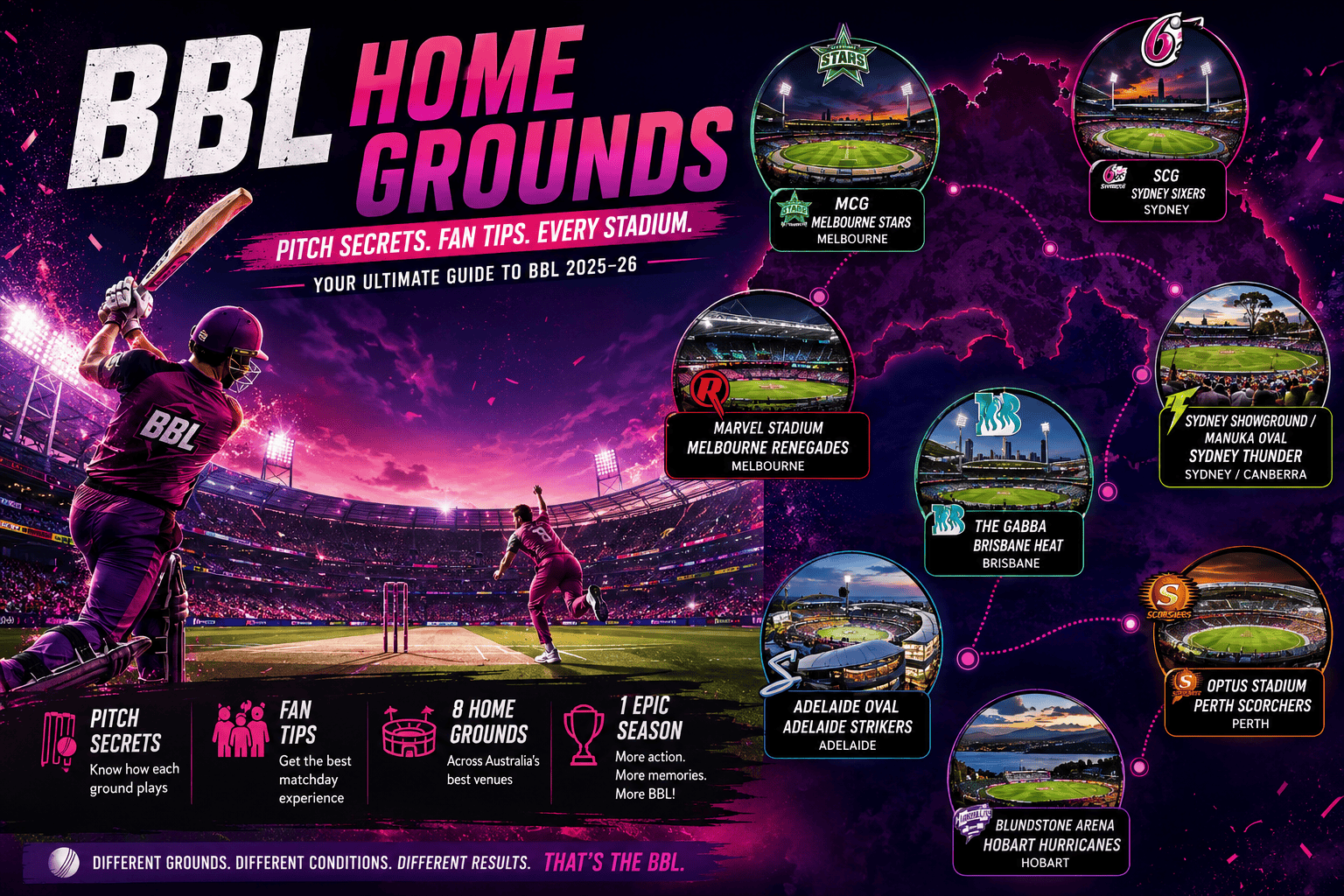
The BBL 2025–26 season is played across eight main BBL home grounds — MCG (Melbourne Stars), SCG (Sydney Sixers), Marvel Stadium (Melbourne Renegades), The Gabba (Brisbane Heat), Adelaide Oval (Adelaide Strikers), Optus Stadium (Perth Scorchers), Blundstone Arena (Hobart Hurricanes), and Sydney Showground/GIANTS Stadium plus Manuka Oval (Sydney Thunder) — with a few neutral venues like GMHBA Stadium (Geelong) and Coffs Harbour thrown in for extra fixtures.
Each ground has its own pitch personality: Optus is pace-and-bounce heaven for fast bowlers, Adelaide Oval is a batting paradise, and Manuka Oval quietly favours the bowlers. If you’re planning to watch a match live or just want to understand why scores swing so wildly from city to city, this guide breaks down every ground, one by one.
If you’re the kind of fan who checks live scores mid-match, you already know home ground conditions decide outcomes almost as much as the players do. Let’s get into it properly — ground by ground, pitch by pitch.
What Exactly Is a “BBL Home Ground”?
A home ground in the Big Bash League is the stadium a franchise is contracted to play the majority of its regular-season matches at, usually in its own city or region. Unlike international Test venues, most BBL grounds are shared multi-sport stadiums (AFL, rugby, or soccer venues doubled up for cricket), and several — like Optus Stadium and Marvel Stadium — use drop-in pitches, which are grown off-site and craned into the arena before the match. This matters because drop-in pitches often play differently to traditional turf wickets prepared in the same soil for years, and it’s a big reason some grounds are notoriously bowler-friendly while others turn into run-fests.
You can always double-check the latest fixtures and confirmed venues on the official Big Bash League website.
Full List of BBL Home Grounds 2026-27
| Team | Home Ground | City | Capacity (approx.) |
|---|---|---|---|
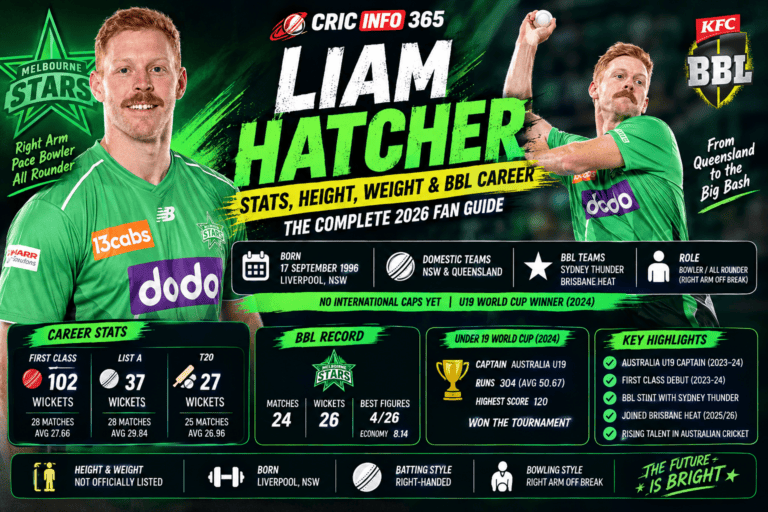
| Melbourne Stars | Melbourne Cricket Ground (MCG) | Melbourne | 100,000+ |
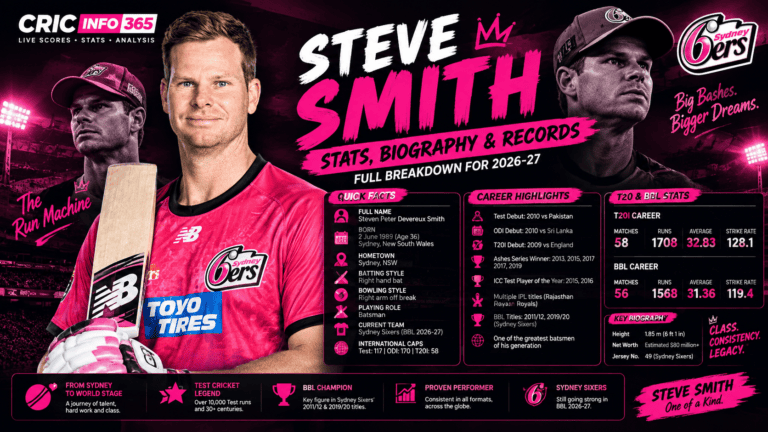
| Sydney Sixers | Sydney Cricket Ground (SCG) | Sydney | 48,000 |
| Melbourne Renegades | Marvel Stadium | Melbourne | 53,000 |
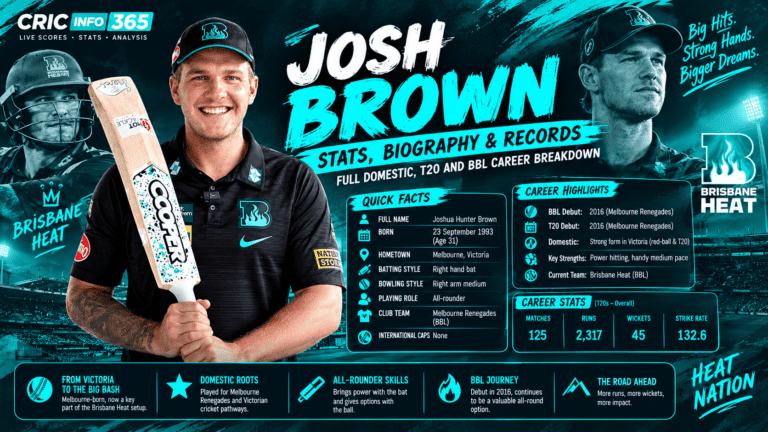
| Brisbane Heat | The Gabba | Brisbane | 42,000 |
| Adelaide Strikers | Adelaide Oval | Adelaide | 53,500 |
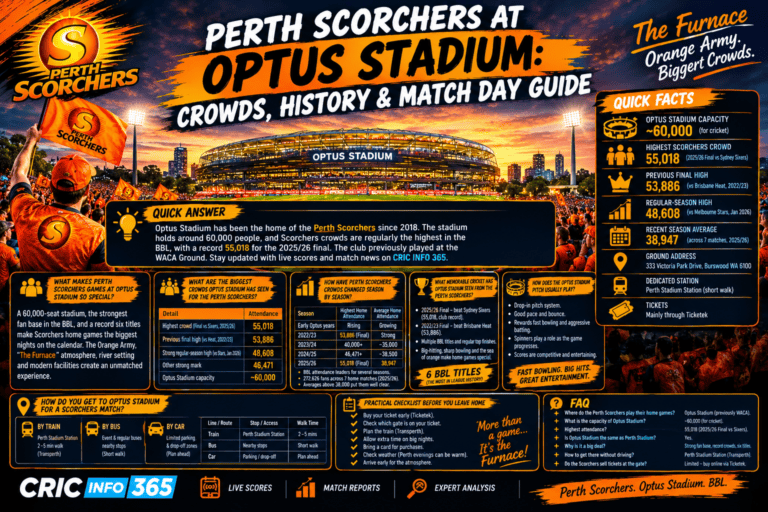
| Perth Scorchers | Optus Stadium | Perth | 60,000+ |
| Hobart Hurricanes | Blundstone Arena | Hobart | 20,000 |
| Sydney Thunder | Sydney Showground Stadium / Manuka Oval | Sydney / Canberra | 22,500 / 14,000 |
A handful of “bonus” matches also get shared out to GMHBA Stadium in Geelong and Coffs Harbour International Stadium, mainly to take BBL cricket to regional fans — something Cricket Australia has leaned into more each season with matches played across top Australian venues such as the MCG, SCG, Optus Stadium, The Gabba, Marvel Stadium, Adelaide Oval, Blundstone Arena, and Sydney Showground Stadium.
MCG — The Fortress of the Melbourne Stars
Capacity: Over 100,000, making it the biggest cricket ground in the Southern Hemisphere by a mile.
Pitch behaviour: The MCG surface is generally balanced, good enough for batters once set, but with enough carry for pacers early on. Because the ground is so massive, straight boundaries can feel a long way off, which slightly favours bowlers compared to smaller Australian venues.
Fan tip: Arrive early. Gates at the MCG open well before the toss, and getting through security for a 100,000-capacity venue during a big Renegades-Stars derby takes longer than fans expect. Sit in the members’ or outer areas depending on budget, the atmosphere carries just as well from the cheaper seats.
SCG — Sydney Sixers’ Home Turf
Capacity: Around 48,000.
Pitch behaviour: The SCG is one of the more traditional turf wickets in the competition (not a drop-in pitch), and it tends to slow down and grip a bit more as the match goes on, giving spinners a real role in the middle overs, unusual for a T20 tournament.
Fan tip: The Sixers have one of the loudest, most consistent home crowds in the league. If you want the full BBL matchday experience, chants, drums, the works, SCG night games are hard to beat.
Marvel Stadium — Melbourne Renegades’ Indoor Advantage
Capacity: Roughly 53,000, with a retractable roof.
Pitch behaviour: Because Marvel Stadium can be fully enclosed, weather seldom interrupts play here, no rain delays, no dew problems late at night, which is a genuine tactical factor other grounds can’t offer.
Fan tip: If you’re worried about weather ruining your ticket, Marvel Stadium games are the safest bet on the BBL calendar.
The Gabba — Brisbane Heat’s Fortress
Capacity: 42,000.
Pitch behaviour: Historically one of Australia’s fastest, bounciest surfaces, giving quick bowlers real assistance, especially under lights when the Brisbane humidity kicks in and the ball tends to swing more in the evening session.
Fan tip: Brisbane’s heat and humidity are real — hydrate before you get to the ground, and pick shaded stands if you’re there for a day game.
Adelaide Oval — A Batter’s Paradise
Capacity: 53,500.
Pitch behaviour: The pitch at Adelaide Oval is known to be batting-friendly, offering excellent conditions for batsmen, which often leads to high-scoring games at this iconic ground</cite>. If you enjoy sixes flying into the stands, Strikers home games are usually where you’ll see the most of them.
Fan tip: The Oval’s hill and grass embankment areas are some of the most scenic, laid-back places to watch cricket in the country — great for families and casual fans who want space to move around.
Optus Stadium — Perth Scorchers’ Pace Factory
Capacity: Over 60,000, one of the newest and largest venues on the circuit.
Pitch behaviour: This is where fast bowlers come to hunt. This is a paradise for pace bowlers, who can exploit the consistent carry and bounce to generate early wickets. However, once batters are set, the surface is true and high-scoring, enabling strokeplay, especially with the extra pace on offer. It’s a genuinely fair fight between bat and ball, which is part of why Perth has been so dominant at home — Perth Scorchers have a dominant record at their home ground, winning 26 of their 40 matches in the BBL.
Fan tip: Toss matters here more than almost anywhere else — teams bowling first with the new ball get real early assistance, so don’t be surprised if captains consistently choose to bowl.
Blundstone Arena — Hobart Hurricanes’ Home
Capacity: Around 20,000, the smallest of the traditional BBL home grounds.
Pitch behaviour: Being smaller and more intimate, Blundstone Arena tends to feel closer and louder than its capacity suggests. The pitch has traditionally offered something for both seam and spin bowlers, especially with the cooler Tasmanian evening air affecting swing.
Fan tip: Tickets here sell out faster relative to capacity than almost any other BBL ground, book early if the Hurricanes, the reigning form team of recent seasons, are playing a big fixture.
Sydney Showground & Manuka Oval — Sydney Thunder’s Dual Home
Capacity: Sydney Showground Stadium (GIANTS Stadium) seats about 22,500; Manuka Oval in Canberra holds around 14,000.
Pitch behaviour: Manuka Oval is notably different from most BBL venues. The pitch here is known to favor bowlers slightly, providing more assistance to them than at other venues. As a result, matches at Manuka Oval often feature competitive, lower-scoring games.
Fan tip: If low-scoring, tactical T20 cricket is more your thing than six-hitting fireworks, a Thunder game at Manuka is worth the trip to Canberra.
How Pitch Type Actually Changes the Game
Two pitch categories dominate the BBL: drop-in pitches (Optus Stadium, Marvel Stadium, MCG, The Gabba in some seasons) and traditional turf pitches prepared in-ground (SCG, Adelaide Oval, Blundstone Arena). Drop-in pitches are more consistent from match to match because ground staff control the growing conditions off-site, but they can sometimes lack the natural wear that helps spinners late in an innings. Traditional pitches, by contrast, age and deteriorate over the course of a match, which is why you’ll often see spin become more effective in the back half of an innings at grounds like the SCG.
Weather and dew are the other underrated factors. Coastal and evening matches in Sydney, Perth, and Hobart can get heavy dew late at night, making the ball harder to grip for bowlers and easier to hit for batters chasing — something serious fans track before picking a “team to bowl first” prediction.
Practical Tips for Watching a Match at Any BBL Ground
If you are going to a BBL game for the first time, these tips will make the day smoother:
- Confirm the venue the day before. Secondary grounds do change from season to season.
- Gates open 90 to 120 minutes early. Arrive early if you want the best food options and kids’ activities.
- Public transport is almost always the easiest choice. Trains run straight to Optus Stadium and the MCG. Trams and trains serve Docklands and the SCG well.
- Summer weather in Australia can switch quickly. Carry sunscreen, a hat, and a light jacket that packs small.
- Family zones exist at nearly every ground. If you are bringing kids, ask staff where the quiet or family areas are.
- Download the official BBL app or check the team social channels for gate information and any last-minute changes.
For tickets and seating maps, the best starting point is the official BBL tickets page.
-
Which BBL ground has the fastest, bounciest pitch?
Optus Stadium in Perth is widely regarded as the quickest, bounciest surface in the competition, historically inherited from the old WACA Ground’s reputation for pace.
-
Which BBL ground is the most batting-friendly?
Adelaide Oval consistently produces the highest-scoring games, thanks to short boundaries and a true, even surface that rewards attacking batting.
-
Which ground is the smallest in the BBL?
Blundstone Arena in Hobart, with a capacity of around 20,000, is the most compact of the traditional home grounds — which also makes it one of the loudest.
-
Where was the BBL 2025–26 final played?
The final was hosted at Optus Stadium in Perth, where the Perth Scorchers beat the Sydney Sixers to claim their sixth BBL title.
-
Do all BBL teams have just one home ground?
No — Sydney Thunder is the main exception, splitting home fixtures between Sydney Showground Stadium and Manuka Oval in Canberra, while several teams also host a handful of matches at regional venues like GMHBA Stadium in Geelong.
-
Does weather affect BBL matches much?
Yes, particularly dew in evening games at coastal grounds, and Marvel Stadium is the one venue largely immune to this thanks to its retractable roof.
This coverage is brought to you by CRIC INFO 365 — built to give cricket fans fast, reliable live scorecards, match reports, and analysis for every Test, ODI, and T20 as it happens.